

Project Overview
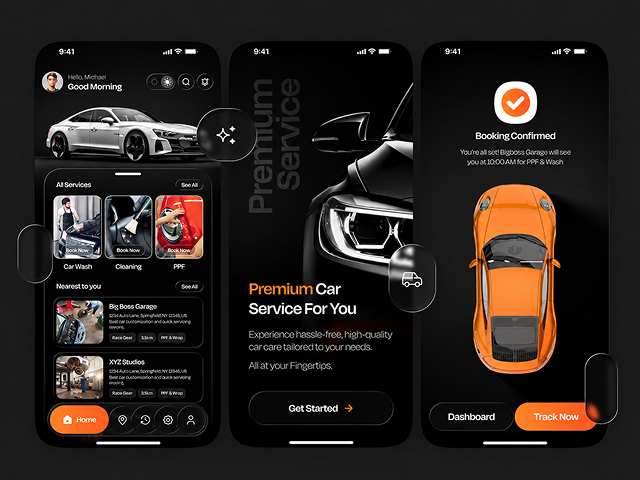
Car Service App is a client-focused mobile application designed to simplify vehicle maintenance, repair bookings, and garage operations. Developed for a US-based company providing automotive services across multiple cities, the app offers a convenient alternative to booking services by phone and tracking vehicle repairs manually.
When the client searched for the best app development company in the USA, they found ManekTech and approached us to discuss their requirements and explore the right solution for their business. After understanding their needs, we provided a customized estimate for the mobile app development cost, tailored to the project’s scope and required features.
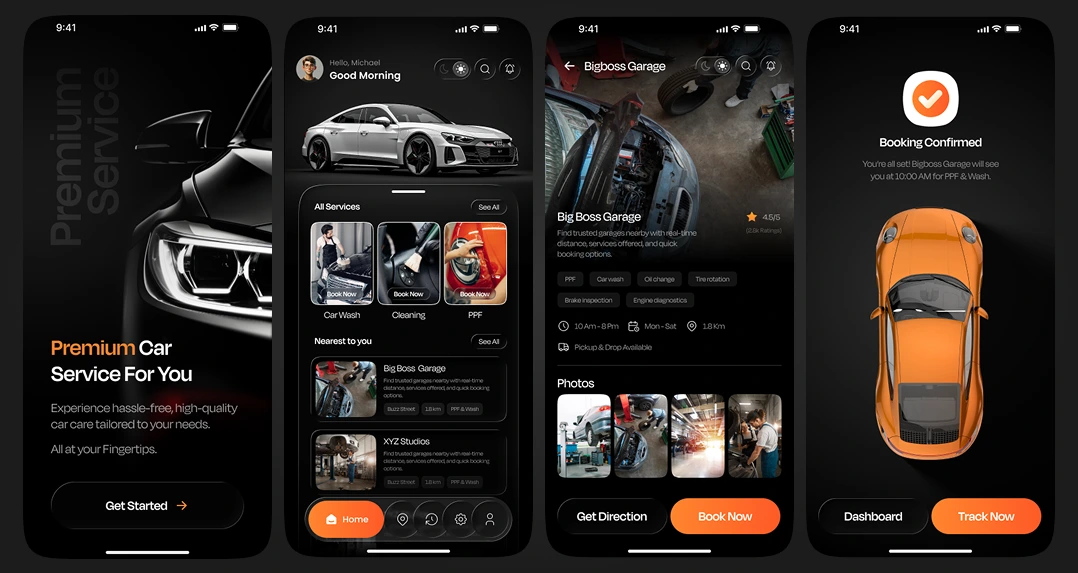
Using the app, customers can select their car model, get service price quotes, book maintenance, track repair progress, and make online payments from their smartphones. Additional features include notifications, emergency roadside assistance, service history, and an admin dashboard that helps garage staff manage bookings and repair workflows efficiently.
Built using Flutter and Node.js with Express.js, the solution connects customers and service teams through a single platform. Its user-friendly interface, automated notifications, and repair tracking capabilities improve customer convenience while streamlining daily garage operations.
Project Objectives
- Digitization of vehicle service booking and appointment scheduling.
- Making customers capable of getting their estimated services for their car models and needs.
- Live tracking of inspection, repair, and maintenance processes.
- Reducing unnecessary phone calls and administrative work.
- Making it easy to pay for services via the web by providing multiple payment modes.
- Efficiency in job assignment for employees working in the garage.
- Offering roadside assistance and a location tracking facility.
- Improving customer retention by maintaining service history, reminders, and feedback.
Let's Shape Your Project Together
Have an idea, a challenge, or a new project in mind? Our team is here to help.
Business Challenges
1. Manual Scheduling of Appointments and Meetings
The client heavily depended on telephone calls and walk-ins for the appointment booking process. At peak times, such a process would result in scheduling conflicts, missed appointments, and long waits. Therefore, a digital car service booking system was required to enable customers to make appointments and allow the garage staff to have better control over appointments.
2. Absence of Real-Time Tracking of the Car's Service Status
Customers did not have an overview of the progress of their cars’ repair and maintenance. Customers used to make frequent calls asking if the inspections had been carried out, if parts had been replaced, and if their cars were available for pickup. The business required a feature that would track the car’s service status in real-time.
3. Increase in Administrative Load
In the case of a small team of the owner and two mechanics, dealing with customers’ questions, scheduling repair jobs, and updating the service status manually required more effort and resources.
4. Payment Options Flexibility and Management of Records
Conventional payments done through cash increased the complexity of transaction processing and record-keeping. In addition, customers expected convenient electronic payment facilities. Secure payment gateway integration was a necessity for processing online transactions and making the payment process convenient.
5. Making it Easy and Reliable on a Mobile Device
A large portion of the customers did not have an advanced level of technical knowledge. As such, the application should be simple to use while still taking into account sensitive personal information and timely service communication to users.
Our Solutions
The following solution was developed to address the client’s operational challenges and provide users with a convenient way to book vehicle maintenance and repair services. This cross-platform application includes appointment booking, cost estimation, repair tracking, online payments, and garage management features.
Since most of the client’s customers used Android devices, we initially focused on building a reliable solution through an experienced Android app development agency. However, considering the client’s long-term growth plans, we recommended a cross-platform application compatible with both Android and iOS. As an iPhone app development agency, we also ensured that the app followed Apple’s usability standards while maintaining a consistent experience across both platforms.
Simplify Car Service Booking and Cost Estimation
A digital booking procedure where customers can choose their car model, the needed service, ask for a cost estimate, and book a convenient date and time.
Real-time Repair Update and Notification
The application keeps the user updated throughout the whole journey of the vehicle, from inspection through the repair process and getting ready to be picked up by the user. Through push notifications, users will receive information regarding their scheduled appointments and service milestones.
Streamlining the Process for the Garage and Digital Payment Solution
An admin dashboard was built to assist the garage team in managing the appointments, assigning jobs to the mechanics, monitoring the progress of the service, and reviewing customer feedback. Integrations for payments using Stripe, PayPal, and other local payment gateways were implemented for digital payments where required.
Key Benefits
- Booking car maintenance services must be made easy and efficient.
- Before making any bookings, get a quote for your car service.
- Visibility can be gained through real-time vehicle repairs.
- Reduce repeated calls and eliminate follow-up calls altogether.
- Digital payments should be facilitated using multiple payment options.
- Allow your employees to make job bookings and allocate mechanics.
- Offer your clients roadside assistance and locate their vehicles.
- Monitor the history of your vehicles’ maintenance.
- Remind your clients through push notifications and alerts.
Key Features
Customer Registration & Profile Management Give customers the option to register using their mobile numbers or email IDs and manage their profiles and details related to their vehicles.
Online Booking of Car Services Provide the facility to select a suitable vehicle, select the service type, and book a service appointment to get it inspected or repaired.
Instant Service Cost Quotation Make it possible for customers to ask for an estimate of their service cost according to the vehicle model and services they need.
Real-Time Tracking of Vehicle Services Update customers at all significant milestones of the service, from its inspection repairing work to the readiness of their vehicle for collection.
Push Notification & Alerts Provide notifications regarding the confirmation of appointment, repair status updates, service reminders, and other useful alerts to the customers.
Emergency Roadside Assistance Provide customers with the facility to get emergency roadside assistance for any problem in their vehicles.
Vehicle Services History & Maintenance Provide details of previous vehicle services for customers to look into and know about the services required for the upcoming inspection.
Digital Payments via Stripe & PayPal Support online payments through integrated Stripe and PayPal payment gateways.
Admin Dashboard & Jobs Management Allow the owners of the garages to have an interface where they can manage the appointments made and assign jobs to the mechanics.
Customer Feedback & Rating System Let customers be able to rate their service experience and give some comments.
Technology
| Mobile App Development | Flutter |
| Backend | Node.js with Express.js |
| Database | MongoDB |
| Admin Dashboard | React.js |
| Payment Gateway Integration | Stripe, PayPal, Local Payment Gateways |
| Push Notifications | Firebase Cloud Messaging (FCM) |
| Location Tracking | Google Maps API |
| Cloud Hosting | Amazon Web Services (AWS) |
| API Architecture | REST APIs |
| Application Architecture | Cross-Platform Mobile Architecture |
Business Results
34%
Increase in Service Bookings
The client reported an increase in bookings after launching the car service booking app. Online appointment scheduling made it easier for customers to arrange vehicle maintenance without relying on phone calls or walk-in visits.
50%
Reduction in Unnecessary Customer Calls
Real-time repair tracking and automated status notifications reduced the need for customers to contact the garage repeatedly for updates on inspections, repairs, and vehicle pickup.
40%
Improvement in Staff Efficiency
The digital booking and job management workflow helped streamline appointment handling, mechanic assignments, and service status updates, allowing the garage team to manage daily operations more efficiently.
Improved Customer Retention Through Maintenance Reminders
Scheduled reminders for inspections and routine maintenance helped the business stay connected with customers and encouraged them to return for future vehicle servicing.
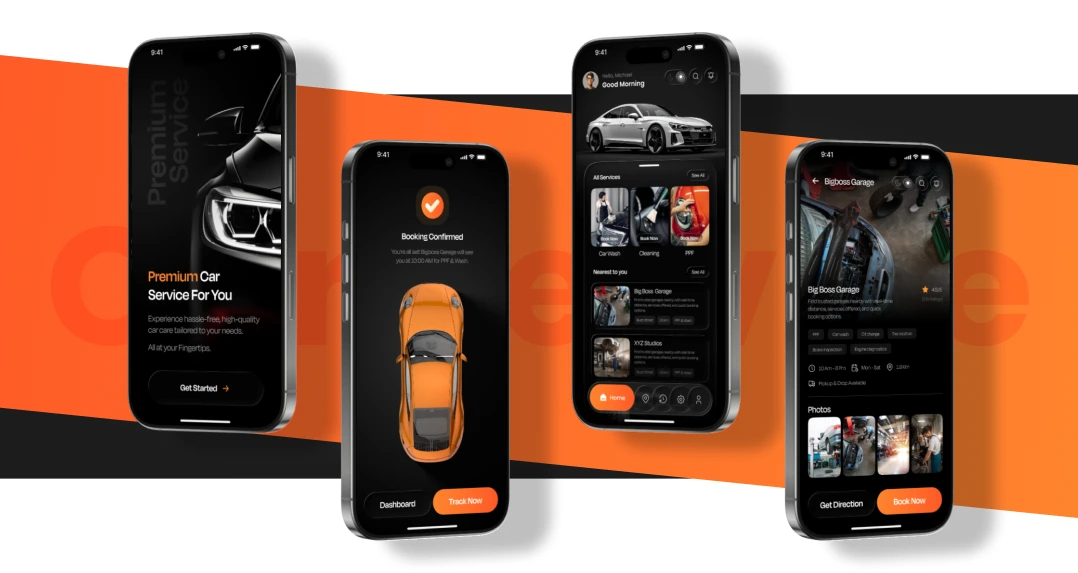
Product Gallery
Planning a Similar Mobile Application Project?
Whether you’re building from scratch, modernizing an existing application, or expanding your engineering team, our experts are ready to help.
- 450+ Engineers
- 14+ Years
- Flexible Engagement
- US Business-Hour Collaboration
Frequently Asked Questions
It is an application that enables users to organize vehicle maintenance, obtain repair quotes, monitor service progress, and pay for services without having to call a garage each time.
There might be many useful features available in a car maintenance application, such as service booking online, vehicle profiles, repair quotes, repair monitoring, push notifications, payment gateway integration, maintenance alerts, repair history, roadside assistance, and an admin panel.
Certainly, since there will be updates regarding the service progress, which would inform users about the process of vehicle inspection, repairs, and readiness to be picked up.
Flutter framework, Node.js with the Express.js framework, MongoDB database, and React.js were used to build this application, while Firebase Cloud Messaging, Google Maps API, AWS, and payment gateways were integrated into it.
Yes. It uses Stripe, PayPal, as well as other local payment providers that are compatible with the app. UPI availability is determined by the provider that is chosen by the company.
Yes. Multiple branches or services, as well as multiple mechanics, can be managed using this app. The scope of such functionality is determined by the specific needs of the business.
This app helps in automating scheduling appointments, communicating with customers, assigning tasks, and managing their performance.