

Project Overview
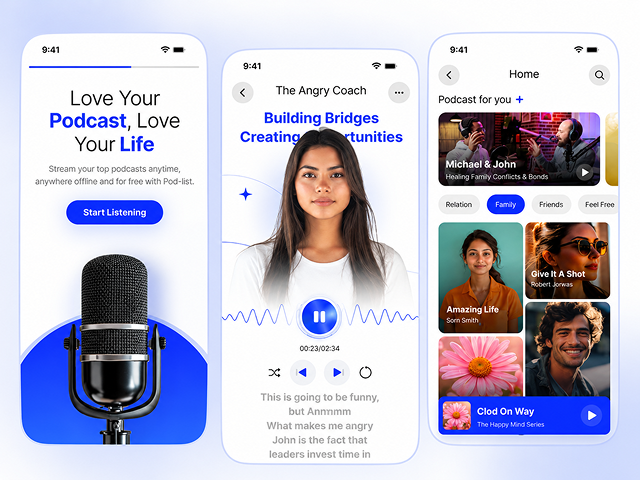
AI-Powered Podcast App is a specially tailored solution for audio content streaming and management aimed at providing a media and entertainment company based in the UK with advanced audio content management and personalization. This platform was created in order to simplify the process of creating podcasts, to automatize common tasks of content management and to increase personalization of the listening experience.
As the number of podcasts and their listeners grew, the processes of transcription, categorization and tagging became too time-consuming for the company. In order to solve these problems, the developers created the AI-powered podcast platform, which includes automatic transcription, personalized recommendations, voice cloning in different languages and analytics for the audience. Using our knowledge of Android app development services in the UK and cross-platform design, we were able to create a unified digital experience, while using a cloud-native, microservices architecture to provide secure storage of data and ability to scale up.
The solution uses Node.js and Python, as well as AI and machine learning techniques in order to simplify management of podcasts, to make the content easily discoverable and to reach an international audience.
Project Objectives
- Transcription of podcasts, as well as tagging and content categorization.
- Improved podcast discovery via AI-based personalized recommendations.
- Increased global reach of podcasts through multilingual translation and voice cloning.
- Decreased effort in manual editing and content creation.
- Insights on listener behavior and advertisement effectiveness.
- Simplified podcast publication through a content management system.
- Scalable and cross-platform audio streaming capability.
- Increased security of content as per applicable privacy and copyright laws.
Let's Shape Your Project Together
Have an idea, a challenge, or a new project in mind? Our team is here to help.
Business Challenges
1. Time-Consuming Manual Podcast Production Process
The client had an extensive collection of podcasts spanning entertainment, lifestyle, business, and news genres. Transcription, tagging, categorization of the audio content, and preparation of podcasts for publishing took up much of the production team’s time. This process slowed down the delivery of podcasts and made errors more likely.
2. Lacking Intelligent Recommendations
Users could not receive relevant recommendations for podcast episodes as they could be too generic. There was no intelligent system that would help users find interesting podcasts and encourage them to listen to more.
3. High Cost of Multilingual Content Creation
To attract the audience from Europe and the Middle East, podcasts had to be translated and adapted into other languages. Such traditional approaches entailed significant production expenses.
4. Lack of Audience Analytics
For the client to have better knowledge about the demographics of listeners, performance of episodes, listening patterns, and advertisements, there was a need to have an advanced analytics dashboard.
5. Integration of Advanced Technologies
To create an intelligent podcast application, it was necessary to implement technologies such as speech recognition, natural language processing, machine learning, translation, and voice cloning. In addition, the platform had to be capable of working with big amounts of audio material and providing reliable operation for an increasing number of users.
6. Content Security and Data Privacy Needs
Handling of both original podcasts and podcasts from external sources presented challenges related to content protection and copyright management.
Our Solutions
As a leading United Kingdom trusted app development agency, our research team started by going through some of the great podcast apps in the market.
For the development of the system, our specialists used programming languages such as Node.js and Python in order to create the robust back-end and implement AI workflows in the process of podcast management and distribution.
With automated processes of podcasts generation, the media company gets the opportunity to pay attention to other activities connected to content creation and audience growth.
Automate Podcast Transcription and Content Tagging
The technology of automated audio transcription and natural language processing was implemented into the system in order to automate and make the process of organizing podcasts easy and consistent.
Provide Personalized Podcast Suggestions
The software relies on machine learning algorithms that can examine different signals related to listening, such as episode plays, time spent listening, likes, and searches. This way, it is possible to provide more personalized recommendations for users.
Gain International Reach with AI Voice Cloning
In order to ensure that our product grows internationally, we decided to implement multilingual translation and AI voice cloning features that would allow users to localize their podcasts without losing the unique voice qualities of the speaker.
Turn Listener Data into Valuable Insights
An advanced analytical dashboard gives the opportunity to learn about listeners’ demographic information, their engagement rates, performance of episodes, and advertising effects.
Key Benefits
-
Automate podcast transcription, tagging, and categorization.
-
Minimize time spent on repetitive content production processes.
-
Increase podcast visibility through personalized recommendations.
-
Enable multilingual podcast broadcasting for global listeners.
-
Easily manage and publish episodes.
-
Measure listener engagement and ad performance.
-
Create data-driven decisions about your content and marketing strategies.
-
Help manage increasing library sizes through scalable software architecture.
-
Increase accessibility and visibility through podcast transcription.
Key Features
Audio Tagging and Categorization in AI
Automatically tag podcast content with appropriate labels and sort them into appropriate categories, enabling listeners to identify episodes by subject matter, category and other important aspects of content.
Automatic Podcast Transcription
Transcribe podcasts into written language using speech recognition. It will make the content more accessible, will help to edit podcasts, as well as make them more searchable.
Personalized Podcast Recommendations Using Machine Learning
Utilize machine learning algorithms to recommend users with relevant podcasts based on their behavior and preferences.
Multilingual Voice Cloning and Translation of Podcasts
Translate podcasts into additional languages and create localized versions with the use of AI voice technology.
Advanced Audience Analytics Dashboard
Analyze the demographics of your audience, their behavior, engagement, and performance of individual episodes along with advertising analytics through one unified dashboard.
Podcast Content Management System
Enable creators and podcast administrators to upload, edit, schedule, and publish episodes using a unified content management system.
Cross-Platform User Experience
Create a seamless experience for listening to podcasts on multiple digital platforms.
User Account Management
Allow users to create an account and be able to listen to podcasts in a personalized way using account capabilities.
AI-Powered Scalable Architecture
Build your application using service-oriented architecture in order to allow for future AI integrations and flexibility in platform capabilities.
Technology
| Backend Development | Node.js, Python (FastAPI) |
| Frontend Development | React.js, React Native |
| AI/ML Frameworks | TensorFlow, PyTorch |
| Speech Recognition | Google Speech-to-Text API, OpenAI Whisper |
| Natural Language Processing | spaCy |
| Translation | DeepL API |
| Voice Cloning | ElevenLabs Voice AI |
| Database | MongoDB, PostgreSQL |
| Cloud Infrastructure | AWS |
| Containerization | Docker |
| Orchestration | Kubernetes |
| CI/CD | CI/CD Pipelines |
| Analytics | Google Analytics, Mixpanel |
Business Results
80%
Reduction in Manual Content Processing
AI-powered transcription, tagging, and categorization reduced repetitive manual work, helping the production team manage podcast episodes more efficiently.
40%
Increase in Listener Retention
Personalized podcast recommendations improved content relevance and encouraged listeners to continue engaging with the platform.
50%
Faster Podcast Publishing
Automated content workflows and multilingual release capabilities helped accelerate episode preparation and publishing.
25%
Growth in International Audience
AI-powered translation and voice cloning supported multilingual content distribution, helping the client reach listeners in additional markets.
44%
Improvement in Performance Through Analytics
Real-time audience insights and more informed advertising placement improved the reported performance of content and marketing activities. The precise metric used to calculate this improvement should be confirmed before publication.
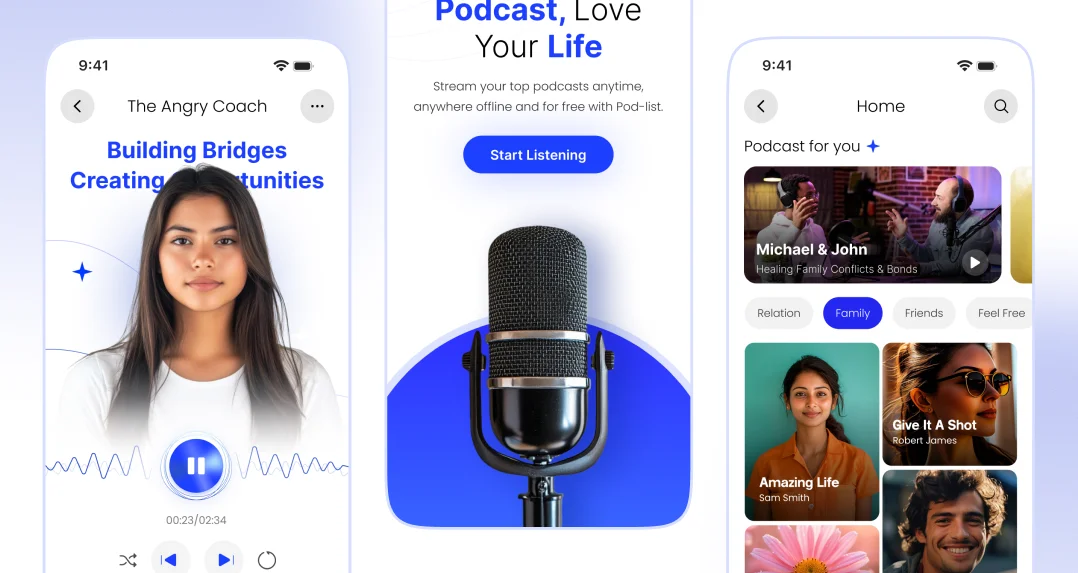
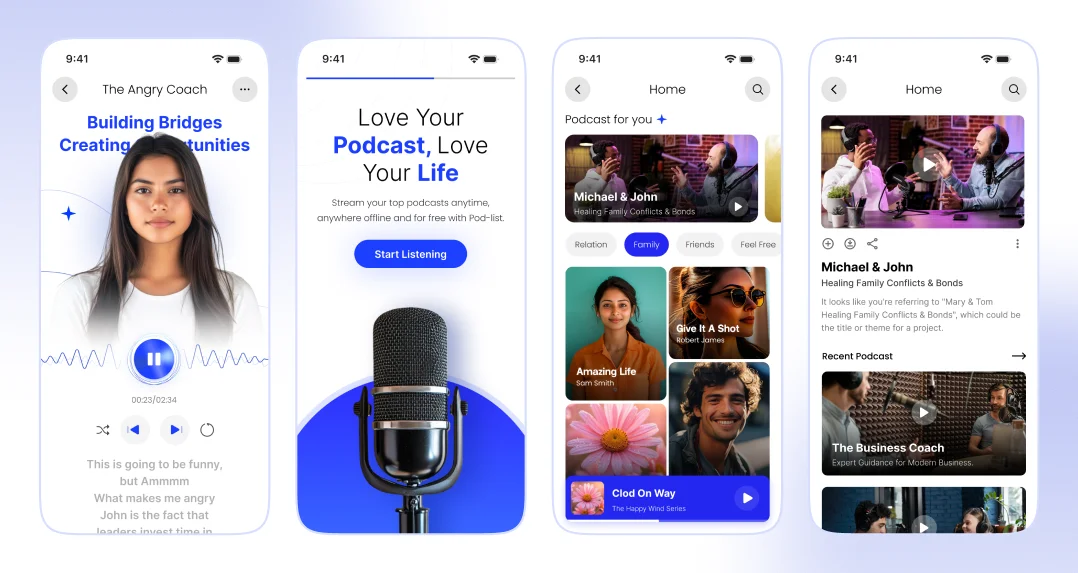
Product Gallery
Are you Interested in Creating A Similar App for Audio Streaming?
Our consultants are ready to hear your ideas. Request a free consultation with our software & app experts and transform it into a digital reality.
- 450+ Engineers
- 14+ Years
- Flexible Engagement
- US Business-Hour Collaboration
Frequently Asked Questions
The term refers to applications that make use of AI technology to make processes such as podcast creation, distribution, audience engagement, and search more efficient. These apps could have the following features: automatic transcription, tagging, personalization options, multilingual voice cloning and translation, analytics.
Artificial intelligence is capable of automating routine operations such as conversion of audio to text, tagging, creation of searchable content, and preparation of podcasts for distribution. With AI, producers are free to concentrate on other aspects of the process.
Indeed. The machine learning algorithms are capable of analyzing the listening habits and preferences and making suitable recommendations.
Thanks to cloning and translation technology, podcasters can translate their podcasts into other languages and preserve certain elements of the speaker’s voice.
The backend technologies for such kind of an application can consist of Node.js, Python, React and React Native for the front-end side, as well as TensorFlow and PyTorch for machine learning. It should also have speech recognition API and the cloud infrastructure like AWS.
It will vary depending on how many platforms are there, what AI functionalities are involved, whether or not there is an ability for integration, user management, cloud infrastructure and analytics. The cost of developing the custom podcast application will be higher than that of the basic one, which does not involve multilingual voice cloning, personalization and analytics.
The time it takes for development will be determined by the required functionalities, design, AI integration, testing and other requirements. The apps with complex transcription, voice cloning, recommendations and analytics will take longer to be developed than audio streaming apps.
It can, with proper architecture and cloud infrastructure.