

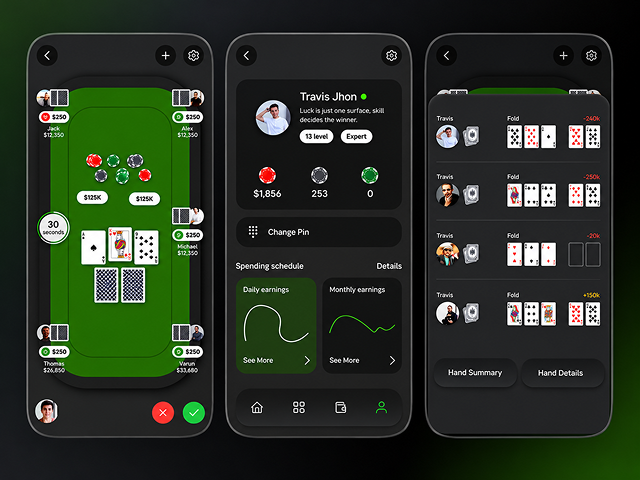
Project Overview
The Online Poker Game App is a cross-platform gaming application designed for a USA-based startup aimed at gaining recognition in the highly competitive field of mobile games. The customer wanted to create a gaming platform where casual players as well as professional poker players could play, compete, and socialize with other players.
The platform includes real-time multiplayer gaming along with interactive elements such as leaderboards, rewards, chatting, and private tables. Virtual chips, tournament purchases, and other ways of monetization are also available in the app.
Built on the basis of React Native, Node.js, and Firebase, the platform offers a consistent mobile experience on both Android and iOS devices. Real-time communication is provided with the help of WebSocket technology, while security and fair gaming are ensured with authentication and anti-cheating systems.
Project Objectives
- Create an interesting poker game app for Android and iOS platforms.
- Ensure that the gameplay is smooth and real-time in multiplayer mode.
- Offer tournaments, game modes, and leaderboard competitions.
- Promote player participation through rewards and social features.
- Ensure the implementation of secure logins and cheating prevention mechanisms.
- Enable in-app purchases and revenue generation.
- Design an easy-to-use interface for new and experienced players alike.
Let's Shape Your Project Together
Have an idea, a challenge, or a new project in mind? Our team is here to help.
Business Challenges
1. Ensuring Player Engagement
Although the client was already engaged in developing casual games, he decided to move to the more challenging field of poker gaming. In order to attract customers, the game should be interesting and include various game modes, bonuses, and rewards.
2. Providing Real-Time Multiplayer Gameplay
In the case of playing poker online, the synchronization of players’ moves, cards, bets, and results is essential. Inconsistent data exchange may spoil the entire gameplay. The application should have reliable real-time communication between the connected devices.
3. Preserving Fairness and Security of the Gameplay
Gaming platforms often face threats that include possible access without the permission of account owners, suspicious activities, and any other methods of manipulating the gameplay. It is necessary to ensure account protection and fairness of competition.
4. Integrating Monetization Features
The client was interested in making money via virtual chips, tournaments, and premium features. It is important to consider the issue of payment integration for providing a comfortable shopping experience.
5. Guaranteeing Compatibility Across Different Platforms
The app had to operate flawlessly on both Android and iOS with varying screen size and capabilities. Responsive design, legible cards, easy controls, and optimal performance were some of the aspects that needed to be achieved during development.
6. Creating a Community for Gamers
The client required something beyond just a poker game. Without any interaction, tournaments, and rewards to motivate players, there would be no incentive for the players to keep coming back to play.
Our Solutions
As a trusted iPhone application development company in the USA, we designed this cross-platform poker game app with real-time multiplayer gaming, high user engagement, robust security, and seamless monetization in mind. This technology solution leveraged React Native mobile development, Node.js backend services, and Firebase for scalable real-time data storage.
Timely Multiplayer Gaming Experience
WebSocket technology was used to provide a way to deliver timely updates between players and backend services. Game moves, bets, and other gaming events could be synchronized to ensure a smooth multiplayer experience. Server-side validation of critical game events allowed us to create a better basis for game rule control and minimize possible client-side tampering attempts.
Different Competitive Game Modes and Rewards
Various game modes, tournaments, leaderboards, and an achievement system were added to attract players of different types. Tutorials were included to help beginners learn about poker rules, while competitive elements would make experienced players play extra games.
This ensured that there was an incentive for users to try out the app, see their achievements, and come back.
Security and Fair Play Controls
Our solution included secure authentication, encryption technologies, and anti-fraud controls for account security and fair gaming. Suspicious activity monitoring and validation of important game actions performed on the server helped decrease the chances of cheating.
In-App Purchases and Monetization
It was developed in such a way that it allows purchasing virtual chips, offerings associated with tournaments, and additional features. In-app payment integration provided an opportunity to generate money and create a basis for safe transactions.
Cross-Platform Mobile App Development
React Native technology was applied for the development of the common basis of a mobile app for both platforms (Android and iOS). The interface design concentrated on clear game actions, readable information about players, navigability, and responsiveness. Node.js and Firebase were applied for backend functionality and data management.
Key Benefits
-
Real-time multiplayer poker play.
-
Mobile platform consistency on both Android and iOS devices.
-
Increased engagement via tournaments and rewards.
-
Enhanced social interaction by means of chat and private tables.
-
Interactive tutorials for better user onboarding.
-
Leaderboard and achievement system for rankings.
-
Virtual goods and premium services monetization.
-
Increased security measures for account protection.
-
Flexible architecture for potential gaming enhancements in the future.
-
Increased chances of forming a community of gamers.
Key Features
Player Registration & User Account Management
Offer users the ability to register for an account and log in safely to access their gaming profiles.
Real-Time Multiplayer Poker
Facilitate multiplayer poker gaming with synchronized in-game actions, betting, and outcomes.
Multiple Gaming Modes
Offer diverse gaming modes for leisure gaming users as well as serious poker gamers.
Tournament Gaming
Facilitate tournament gaming with defined game rules for participating players.
In-app Purchasing
Offer in-app purchasing capabilities for various products, including virtual chips.
Anti-cheating and Game Integrity
Implement anti-cheating measures via server validation as well as suspicious activity monitoring.
Player Leaderboards & Rewards
Offer leaderboards and rewards for players, including player points and trophies.
Interactive Tutorials
Include step-by-step instructions in order for new users to understand the basics of the poker game.
Chat and Social Features
Enable players to communicate and invite friends while playing in supported games.
Private Poker Tables
Enable private gaming tables where players can invite the participants of their choice.
Authentication
Utilize authentication methods to safeguard user accounts from any malicious activities.
Analytics and Engagement Tracking
Monitor user engagement through analytical tools.
Technology
| Frontend / Mobile App | React Native |
| Backend | Node.js |
| Data Management & Real-Time Services | Firebase |
| Multiplayer Communication | WebSocket |
| Security | Encryption, Authentication, Anti-Fraud Controls |
| Payment Integration | Payment Gateway Integration |
| UI/UX Design | Figma, Adobe XD |
| Analytics | Google Analytics, Firebase Analytics |
| Platforms | Android, iOS |
| Architecture | Cross-Platform Mobile Gaming Architecture |
Business Results
50%
Increase in User Engagement
Real-time multiplayer gameplay, interactive features, and competitive activities encouraged players to participate more actively.
30%
Increase in Daily Active Users
Tournaments, leaderboards, and social interactions gave players more reasons to return to the application regularly.
25%
Growth in In-App Purchases
Virtual chips, tournament-related offerings, and premium features contributed to increased purchasing activity.
40%
Player Retention After 30 Days
Competitive gameplay, rewards, and social features helped maintain player interest beyond the initial download period.
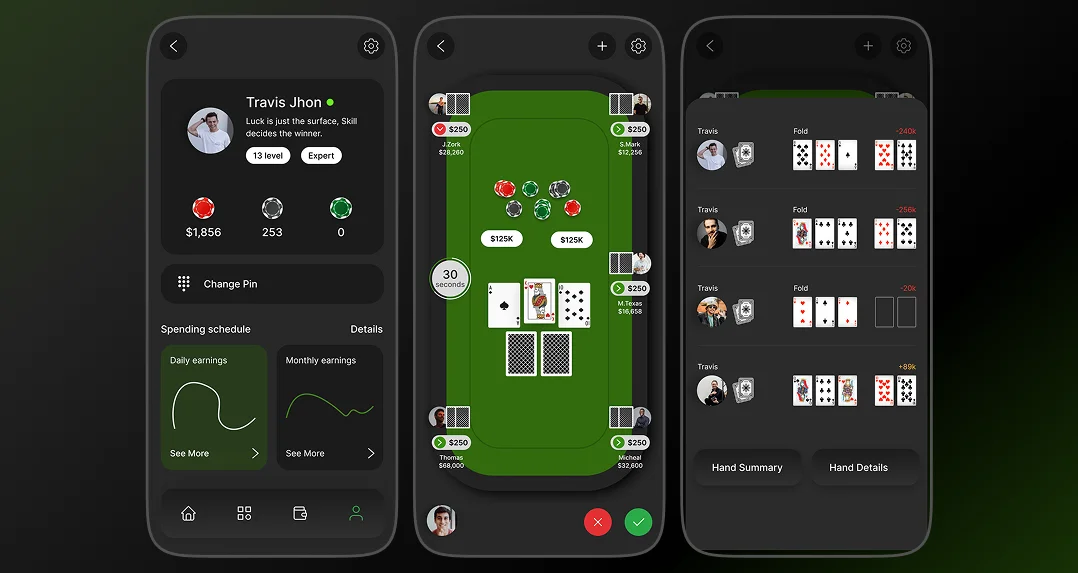
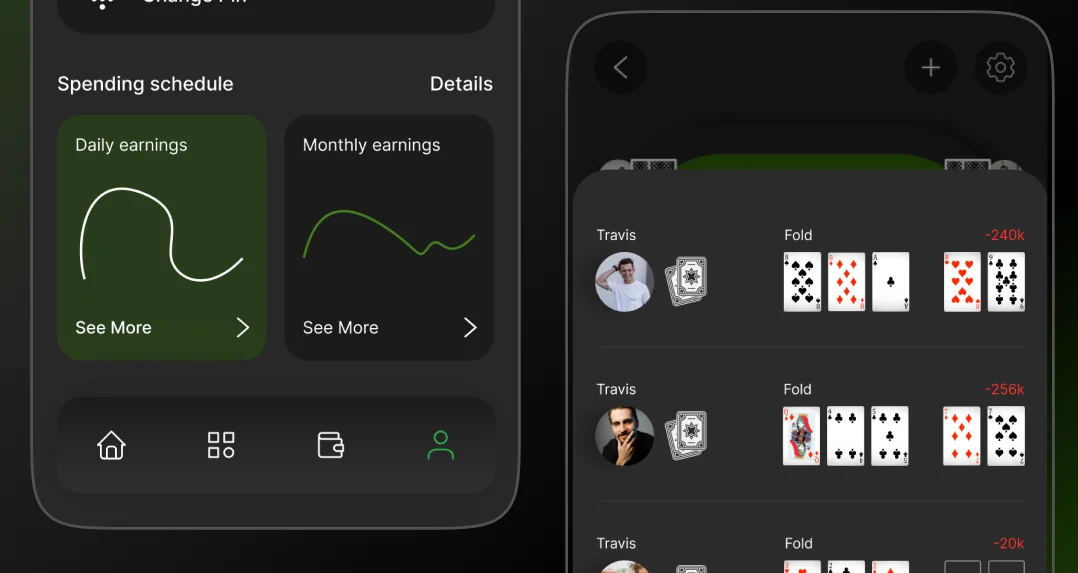
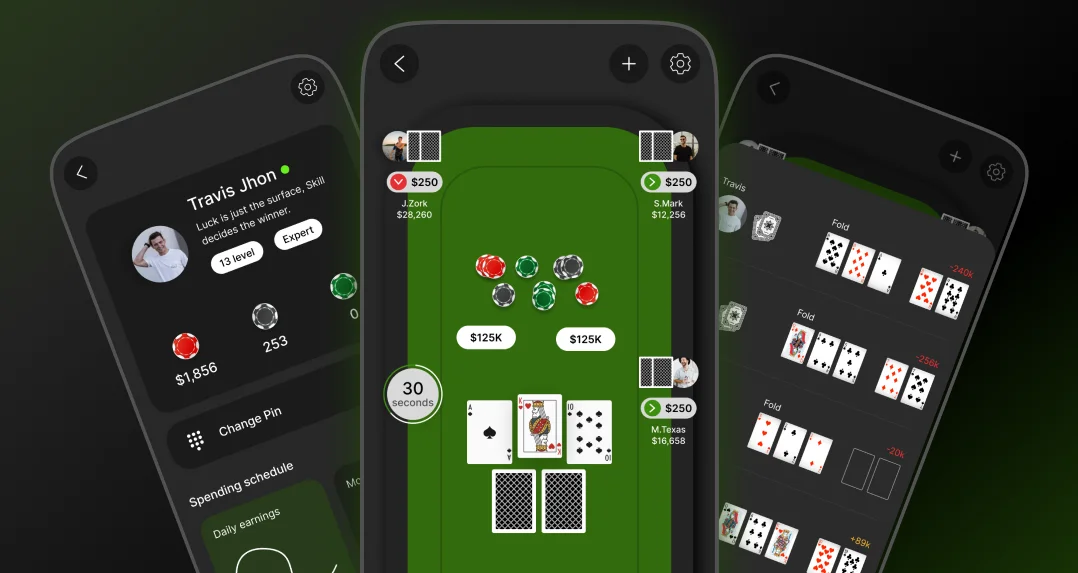
Product Gallery
Are You Interested in Developing a Similar Card Game App?
Have breakthrough mobile app ideas that you want to turn into an engaging gaming product? Partner with the right development team to build a high-performance mobile card game with real-time multiplayer functionality, competitive features, secure payment integrations, and seamless cross-platform support.
- 450+ Engineers
- 14+ Years
- Flexible Engagement
- US Business-Hour Collaboration
Frequently Asked Questions
It is a software application that enables players to play poker games via their mobile devices. It may offer multiplayer games, tournaments, a leaderboard, chat, tutorials, and virtual currency functionality.
It depends on gameplay complexity, multiplayer system, design, security, back-end development, and other factors. The development of a regular poker game usually takes less money than the development of a poker game with lots of features and a high-security system. Read our guide on mobile application development costs.
The development time of the poker game depends on how many features it should have, what kind of gameplay mechanics it should support, multiplayer features, and other factors. A simple application can be developed faster than one with complex mechanics.
React Native, Node.js, Firebase, WebSocket technology, Figma, Adobe XD for design, and Google Analytics, Firebase Analytics for analysis were used.
Real-time communication enables the exchange of game events between connected devices and backend services. WebSockets provide persistent communication, whereas server-side validation ensures compliance with critical actions according to the prescribed rules.
The free-to-play application could earn money from the available in-game purchases and subscriptions. Gambling for money requires extra consideration and regulations.
Yes. The use of React Native allows creating a cross-platform application through code reuse, while separate testing on each platform is performed.