


Project Overview
The Warehouse Inventory Management System was developed to help modern supply chain businesses manage warehouse activities and inventory levels from one place. The customer needed an efficient software system that would allow him to track stock in real time, automate routine inventory tasks, optimize order fulfillment, and eliminate paper-based documentation.
The solution has an easy-to-use interface for warehouse administrators, inventory managers, and fulfillment teams. It includes stock tracking, space optimization, put-away and picking automation, demand forecasting, and reporting features for reliable warehouse operations.
Project Objectives
- Enable real-time inventory tracking across warehouse locations.
- Automate stock put-away, picking, and replenishment workflows.
- Maximize warehouse space utilization through intelligent storage planning.
- Provide accurate demand forecasting to prevent stockouts and overstocking.
- Streamline order fulfillment with digital picking lists and barcode support.
- Offer detailed inventory and financial reporting for better decision-making.
- Build a secure and scalable architecture that integrates with existing supply chain tools.
Let's Shape Your Project Together
Have an idea, a challenge, or a new project in mind? Our team is here to help.
Business Challenges
1. Lack of Real-Time Inventory Visibility
Managing inventory without real-time updates resulted in frequent stock discrepancies, misplaced items, and delayed order processing. The client needed instant visibility into stock levels across all storage bins.
2. Inefficient Space Utilization and Stock Placement
Without a structured put-away strategy, products were placed randomly, leading to wasted warehouse space, longer retrieval times, and disorganized storage areas.
3. Slow and Error-Prone Order Picking
Manual order picking workflows relied on paper lists, which increased fulfillment times and caused picking errors, leading to customer complaints and returns.
4. Difficulty in Forecasting Demand and Preventing Stock Imbalances
The absence of automated forecasting led to frequent overstocking of slow-moving items and stockouts of high-demand products, tying up working capital.
5. Disconnected Systems and Manual Paperwork
Operating with separate spreadsheets and legacy systems created data silos, duplicate entry efforts, and a lack of unified operational reporting.
6. Scalability Constraints for Expanding Operations
As transaction volumes and warehouse facilities grew, the existing infrastructure struggled to maintain performance during peak shipping periods.
Our Solutions
As a provider of custom software development services, we developed a Warehouse Inventory Management System to help businesses optimize warehouse operations, track inventory accurately, and streamline fulfillment workflows.
The system delivers real-time stock updates, automated put-away and picking, predictive inventory analytics, and centralized reporting to ensure smooth warehouse operations.
Real-Time Inventory Tracking
The system provides continuous stock tracking across warehouse aisles, shelves, and bins. With barcode and RFID support, inventory managers can instantly verify stock quantities, track item movements, and reduce discrepancy rates.
Automated Put-Away and Picking
Intelligent algorithms determine optimal storage locations based on product turnover and dimensions. Digital picking lists and optimized travel routes help warehouse staff fulfill orders faster and with higher accuracy.
Demand Forecasting and Stock Planning
Historical sales data and trend analysis are used to forecast stock requirements accurately, helping warehouse teams prevent stockouts and avoid overstocking.
Centralized Reporting and System Integration
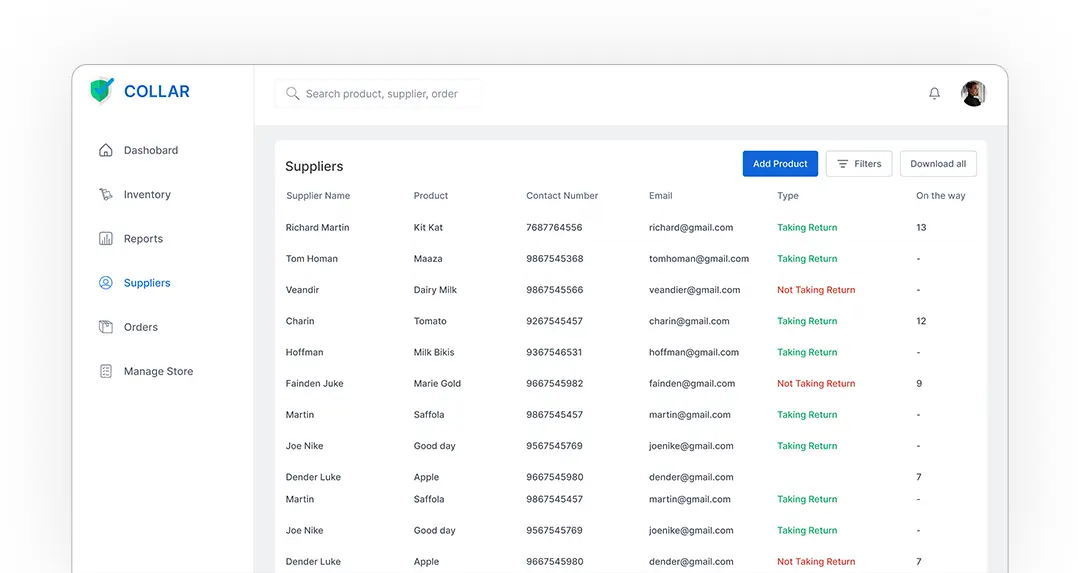
Comprehensive analytics dashboards provide actionable insights on inventory turnover, order cycle times, and storage utilization. REST APIs allow seamless integration with ERP and supply chain software.
Key Benefits
- Real-time visibility into stock levels across all warehouse storage locations.
- Significant reduction in inventory discrepancies and misplaced stock.
- Accelerated order picking and fulfillment with guided workflows.
- Optimal utilization of warehouse floor and vertical storage space.
- Data-driven demand forecasting to balance inventory levels.
- Paperless warehouse management with digital records and barcode scanning.
- Actionable reporting dashboards for inventory turnover and operational metrics.
- Scalable, modular architecture ready to support multiple warehouse facilities.
Key Features
Centralized Inventory Dashboard
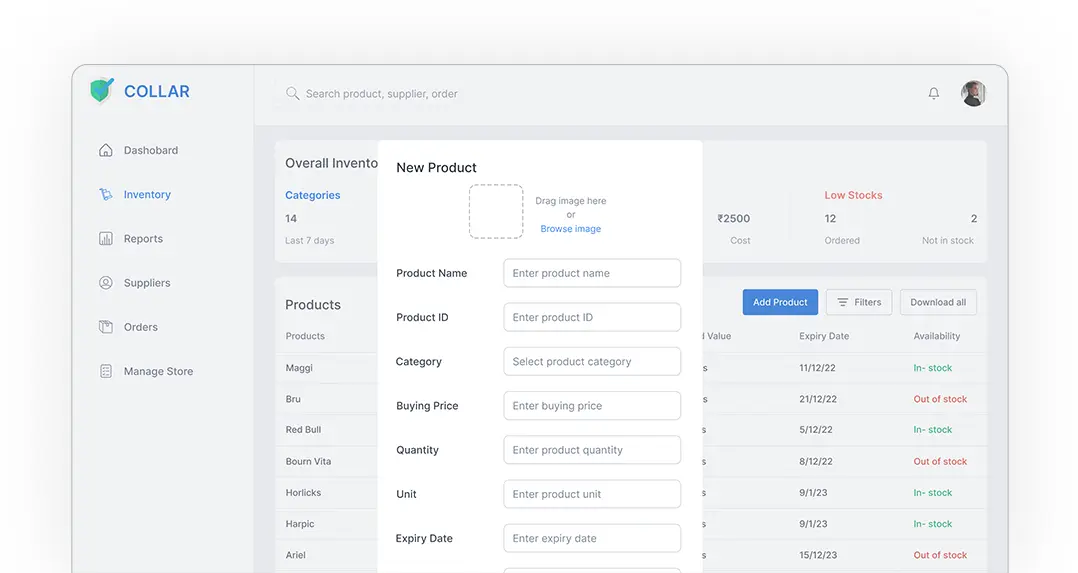
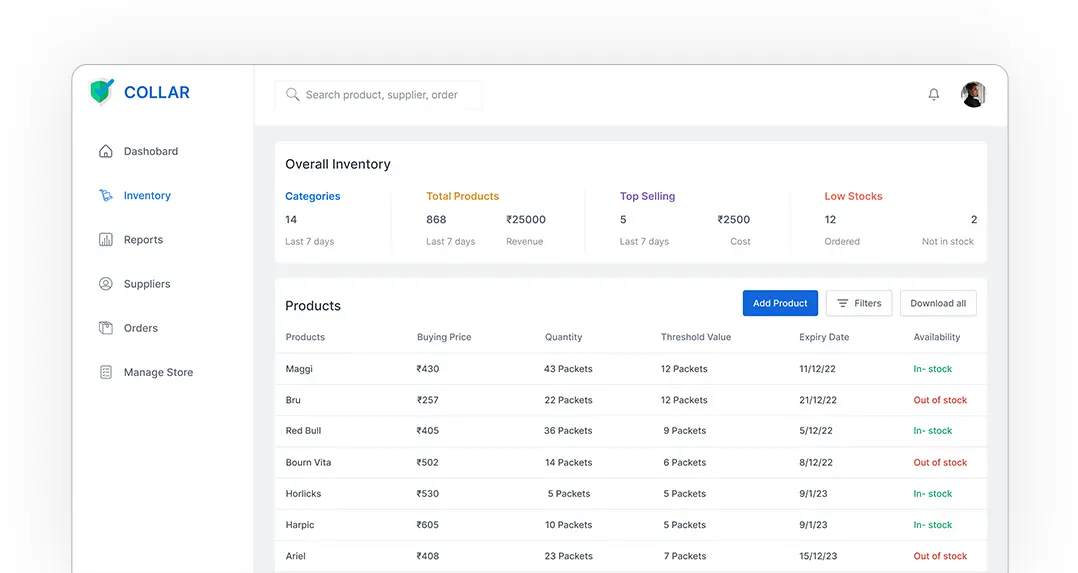
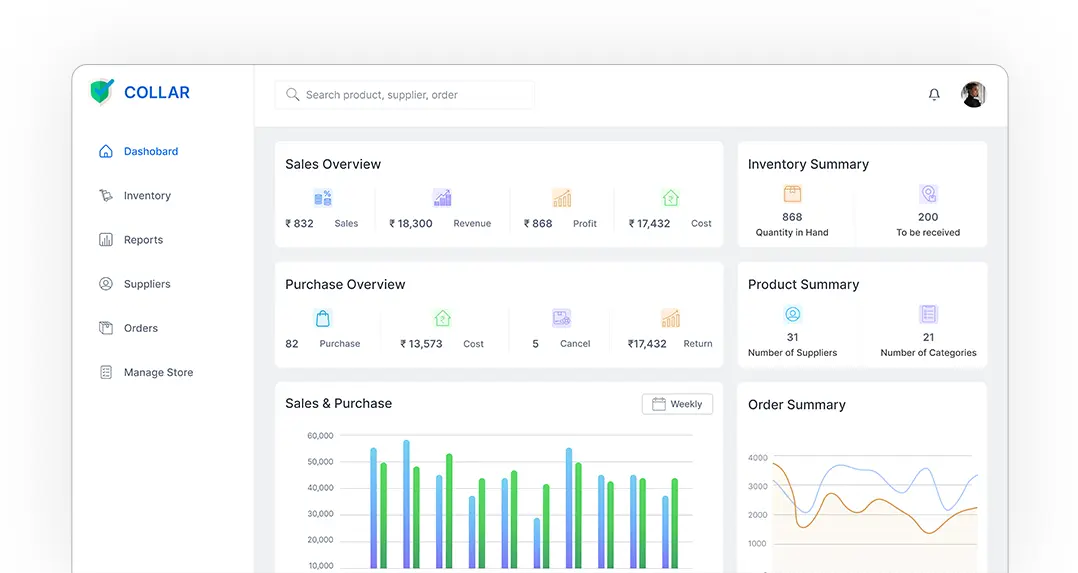
Monitor real-time inventory counts, stock movement histories, and low-stock alerts from a single operational screen.
Bin and Location Management
Map warehouse aisles, shelves, and bins for accurate product placement and fast item retrieval.
Automated Put-Away & Directed Picking
Generate intelligent storage recommendations and optimized picking paths to accelerate fulfillment.
Barcode and RFID Scanning Support
Enable quick item verification during receiving, moving, and packing through handheld scanner integration.
Automated Reorder Alerts & Forecasting
Set minimum threshold levels and receive automated reorder alerts based on demand patterns.
Returns and Damage Management
Track returned products, inspect conditions, and update stock records systematically.
Role-Based Access Control
Configure granular user permissions for warehouse clerks, supervisors, and inventory controllers.
Operational & Inventory Reports
Generate automated reports on stock turnover, order accuracy, fulfillment velocity, and carrying costs.
Technology
| Backend | Java |
| Frontend | HTML, CSS, JavaScript, React.js |
| Database | MySQL |
| Additional Technologies | C#, Python, Node.js |
| Version Control | Git, GitHub, GitLab |
| Containerization | Docker |
Business Results
95%+
Reduction in Inventory Discrepancies
Real-time inventory tracking and more structured stock management helped reduce inventory discrepancies by more than 95%, according to the original project details.
30%
Improvement in Warehouse Efficiency
Optimized warehouse layouts and automated picking and put-away workflows improved operational efficiency by approximately 30%, reducing unnecessary travel time.
25%
Faster Order Fulfillment
Guided picking routes and barcode verification allowed warehouse personnel to assemble orders more quickly and accurately.
20%
Reduction in Holding Costs
Better demand forecasting and automated reordering prevented excess inventory buildup, saving valuable warehouse capacity and capital.
Product Gallery
Are you Interested in Developing A Similar Warehouse Inventory Management System?
Our consultants are ready to hear your ideas. Request a free consultation with our software & app experts and transform it into a digital reality.
- 450+ Engineers
- 14+ Years
- Flexible Engagement
- US Business-Hour Collaboration
Frequently Asked Questions
A Warehouse Inventory Management System is software that helps businesses track inventory levels, manage stock locations, automate put-away and picking, and coordinate order fulfillment across warehouse operations.
Yes, the system is designed to integrate with handheld barcode and RFID scanners for fast receiving, stock counting, and dispatch verification.
The platform generates directed digital picking lists with location-specific routes and requires barcode scanning verification before items can be packed.
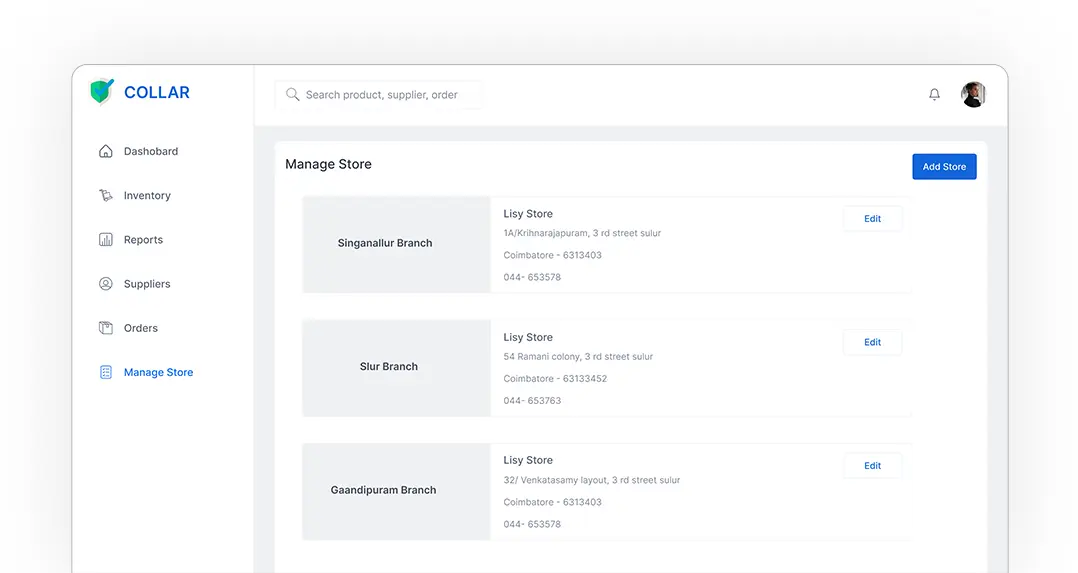
Yes, the modular architecture allows businesses to track and manage stock across multiple warehouses and storage facilities from a single platform.
Yes, the system provides REST APIs that allow integration with existing ERPs, e-commerce platforms, and accounting software.
Automated minimum stock threshold alerts and predictive demand forecasting help inventory managers order replenishments at the right time.